


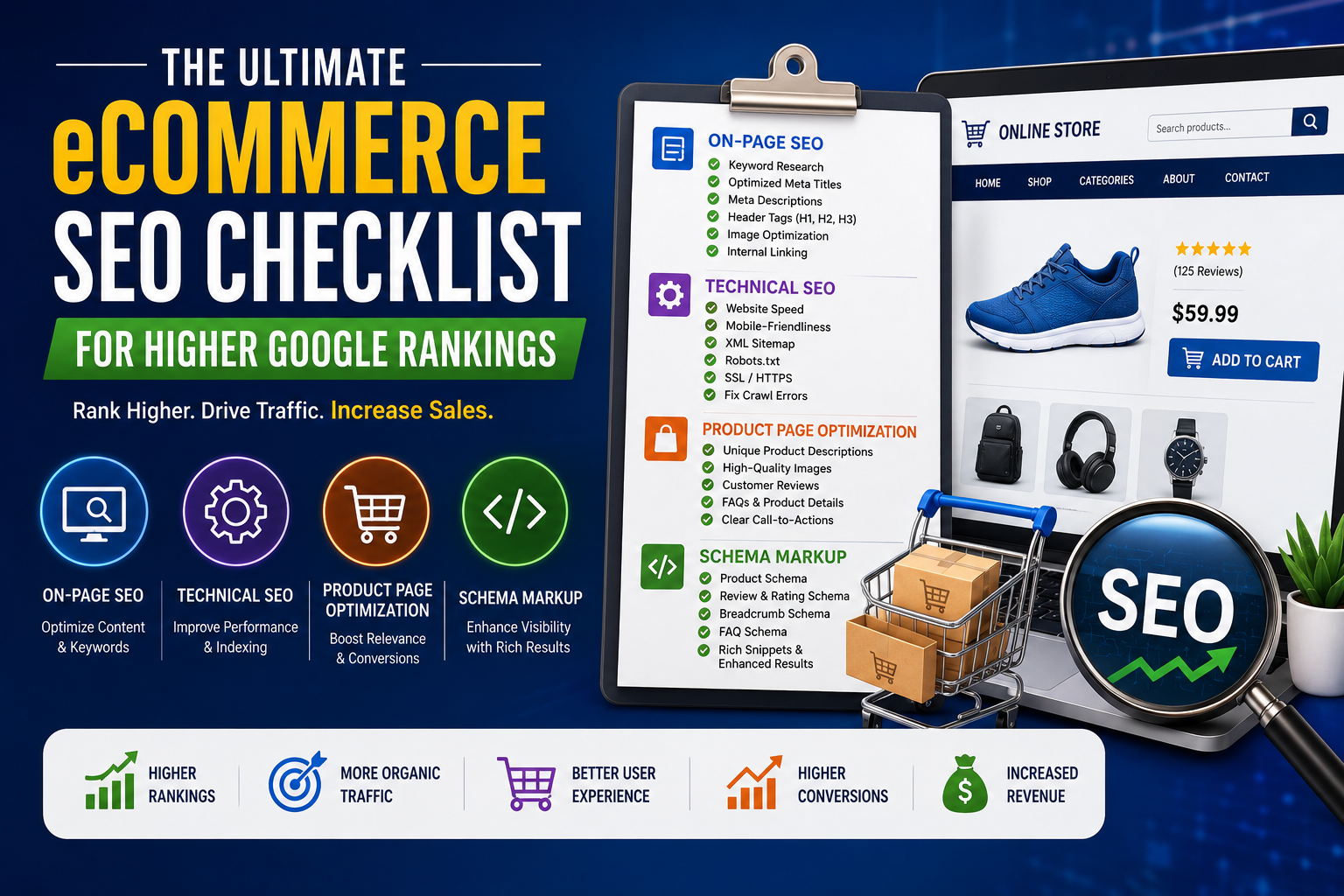
Building a beautiful eCommerce website is only the first step toward online success. No matter how attractive your products are or how seamless your shopping experience is, your store cannot generate consistent sales if potential customers cannot find you on Google.
With millions of online stores competing for attention, search engine optimization (SEO) has become one of the most important digital marketing strategies for eCommerce businesses. Unlike paid advertising, which stops delivering traffic when your budget ends, SEO helps create a long-term source of targeted visitors who are actively searching for products you sell.
A well-optimized eCommerce website can help you:
- Increase organic traffic
- Improve Google rankings
- Attract high-intent buyers
- Reduce dependence on paid advertisements
- Improve conversion rates
- Increase long-term revenue
However, eCommerce SEO is more complex than traditional website SEO. Online stores have thousands of product pages, category pages, filters, duplicate content issues, and technical challenges that require a specialized approach.
This complete eCommerce SEO checklist covers everything you need to optimize your online store, including on-page SEO, technical SEO, product page optimization, schema markup, content strategy, and performance improvements.
What is eCommerce SEO?
eCommerce SEO is the process of optimizing an online store so that product pages, category pages, and other website content appear higher in search engine results pages (SERPs).
The primary goal of eCommerce SEO is to bring relevant users who are searching for products and convert them into customers.
For example:
Instead of ranking for a broad keyword like:
“Running shoes”
A better strategy may include targeted keywords such as:
- Best running shoes for men
- Lightweight running shoes for marathon training
- Affordable running shoes under $100
These long-tail keywords often have higher purchase intent and lower competition.
Part 1: Keyword Research Checklist for eCommerce SEO
Before optimizing any page, you need to understand what your customers are searching for.
- Identify Commercial Intent Keywords
Focus on keywords that indicate buying intent.
Examples:
- Buy iPhone online
- Best gaming laptop under $1000
- Men’s leather wallet price
- Premium office chair online
These visitors are closer to making a purchase.
- Target Long-Tail Keywords
Long-tail keywords are specific search phrases with lower competition.
Benefits:
- Easier rankings
- Better conversion rates
- More qualified traffic
Example:
Instead of:
“Coffee machine”
Target:
“Best automatic coffee machine for small office”
- Analyze Competitor Keywords
Study competitors to discover:
- Which keywords they rank for
- Their top-performing pages
- Content gaps
- Ranking opportunities
SEO tools such as Ahrefs, SEMrush, and Google Keyword Planner can help identify valuable keywords.
Part 2: On-Page SEO Checklist
On-page SEO ensures that search engines understand your website content and users receive valuable information.
- Optimize Page Titles
Your title tag is one of the most important ranking factors.
Best practices:
- Keep titles between 50–60 characters
- Place primary keywords near the beginning
- Make them attractive for clicks
Example:
❌ Men’s Shoes
✅ Buy Premium Men’s Running Shoes Online | Free Shipping
- Write Effective Meta Descriptions
Although meta descriptions are not a direct ranking factor, they improve click-through rates.
Best practices:
- Keep under 155–160 characters
- Include keywords naturally
- Add a call-to-action
Example:
Shop premium men’s running shoes with lightweight design, comfortable fit, and fast delivery. Order online today.
- Use Proper Heading Structure
A clear heading structure improves readability and SEO.
Example:
H1: Main product or category title
H2:
- Features
- Specifications
- Benefits
H3:
- Detailed explanations
Avoid multiple H1 tags on a page.
- Optimize URLs
SEO-friendly URLs should be:
- Short
- Descriptive
- Keyword-rich
Example:
Bad URL:
website.com/product?id=78456
Good URL:
website.com/mens-running-shoes
- Optimize Images
Images play a major role in eCommerce.
Optimize:
- File size
- Image names
- Alt text
- Modern formats such as WebP
Example:
Bad:
IMG12345.jpg
Good:
black-leather-office-chair.jpg
- Internal Linking
Internal links help search engines discover pages and distribute authority.
Link between:
- Blog posts
- Categories
- Products
- Related products
Example:
A blog about “Best Gaming Accessories” can link to gaming keyboards, mice, and headsets.
Part 3: Product Page SEO Checklist
Product pages are the foundation of eCommerce SEO.
- Write Unique Product Descriptions
Avoid copying manufacturer descriptions.
Create original content covering:
- Features
- Benefits
- Materials
- Usage instructions
- Customer problems solved
Unique descriptions help improve rankings.
- Add High-Quality Product Images and Videos
Include:
- Multiple angles
- Zoom features
- Lifestyle images
- Demonstration videos
Rich media improves user engagement.
- Display Customer Reviews
Reviews provide:
- User-generated content
- Trust signals
- Fresh page updates
Encourage customers to leave genuine reviews.
- Add Product FAQs
FAQs help answer customer questions and target additional keywords.
Examples:
- Is this product waterproof?
- What is the warranty period?
- How long is delivery time?
- Optimize Product Availability
Clearly display:
- In-stock status
- Delivery estimates
- Return policy
- Shipping information
These improve user experience and conversions.
Part 4: Category Page SEO Checklist
Category pages often target high-volume keywords.
- Create Unique Category Content
Avoid displaying only products.
Add:
- Category introductions
- Buying guides
- Helpful information
Example:
A category page for laptops can include:
“How to choose the best laptop for work and gaming.”
- Optimize Category Titles
Examples:
Bad:
Laptops
Better:
Buy Laptops Online – Gaming, Business & Student Laptops
- Add Filters Carefully
Filters improve user experience but can create duplicate pages.
Use:
- Canonical tags
- Proper indexing rules
- SEO-friendly navigation
Part 5: Technical SEO Checklist
Technical SEO ensures that search engines can crawl and index your website properly.
- Improve Website Speed
A slow website hurts rankings and conversions.
Optimize:
- Images
- CSS and JavaScript
- Server response time
- Database performance
Use:
- CDN
- Browser caching
- Optimized hosting
- Make Your Website Mobile Friendly
Google uses mobile-first indexing.
Ensure:
- Responsive design
- Fast mobile loading
- Easy navigation
- Touch-friendly buttons
- Enable HTTPS Security
SSL certificates improve security and trust.
Your website should use:
https://
instead of:
http://
- Create XML Sitemap
An XML sitemap helps search engines discover important pages.
Include:
- Product pages
- Category pages
- Blog articles
Update the sitemap regularly.
- Optimize Robots.txt File
Robots.txt controls what search engines can crawl.
Block unnecessary pages such as:
- Admin pages
- Duplicate filters
- Search result pages
- Fix Broken Links
Broken links create poor user experience.
Regularly check:
- 404 errors
- Missing images
- Redirect issues
- Use Canonical Tags
Canonical tags tell Google which version of a page should be indexed.
They are especially important for:
- Product variants
- Filtered pages
- Similar products
Part 6: Schema Markup Checklist
Schema markup helps search engines understand your content and display rich snippets.
- Product Schema
Product schema provides information such as:
- Product name
- Price
- Availability
- Ratings
- Reviews
This can increase click-through rates.
- Review Schema
Review schema displays star ratings in search results.
Benefits:
- Higher visibility
- Increased trust
- Better click rates
- Breadcrumb Schema
Breadcrumb schema improves navigation in search results.
Example:
Home > Shoes > Running Shoes > Men’s Running Shoes
- FAQ Schema
FAQ schema helps display questions and answers directly on Google.
Great for:
- Product pages
- Category pages
- Buying guides
Part 7: Content Marketing for eCommerce SEO
Content helps attract visitors at every stage of the buying journey.
Create Helpful Blog Content
Examples:
- Buying guides
- Product comparisons
- How-to articles
- Industry trends
Examples:
“Best Running Shoes for Beginners”
“How to Choose the Right Gaming Laptop”
Create Educational Content
Answer customer questions before they buy.
Good content builds authority and trust.
Part 8: User Experience and Conversion Optimization
Google values websites that provide excellent user experiences.
Improve Navigation
Your menu should be:
- Simple
- Organized
- Easy to understand
Improve Checkout Experience
Reduce cart abandonment by providing:
- Guest checkout
- Multiple payment methods
- Transparent pricing
Improve Trust Signals
Display:
- Customer reviews
- Security badges
- Return policies
- Contact information
Part 9: eCommerce SEO Monitoring Checklist
SEO is an ongoing process.
Track important metrics:
Organic Traffic
Monitor growth from search engines.
Keyword Rankings
Track your target keyword positions.
Conversion Rate
Measure how many visitors become customers.
Bounce Rate
Identify pages with poor user experience.
Core Web Vitals
Monitor:
- Loading speed
- Interactivity
- Visual stability
Common eCommerce SEO Mistakes to Avoid
Avoid these mistakes:
- Duplicate product descriptions
- Slow website speed
- Missing meta tags
- Poor mobile experience
- Broken links
- Thin category pages
- Ignoring structured data
- Not updating old content
How Alphabet Developers LLP Can Improve Your eCommerce SEO
A successful eCommerce SEO strategy requires a combination of technical expertise, content optimization, and ongoing improvements.
At Alphabet Developers LLP, we help online businesses build SEO-friendly eCommerce websites that attract traffic and convert visitors into customers.
Our eCommerce SEO services include:
- Complete SEO audit
- Technical SEO improvements
- Product page optimization
- Category optimization
- Schema markup implementation
- Website speed optimization
- Mobile optimization
- SEO-friendly eCommerce development
- Magento SEO
- Shopify SEO
- WooCommerce SEO
Why Choose Alphabet Developers LLP?
Experienced eCommerce Team
Our experts understand the technical challenges of online stores.
SEO-Friendly Development
We build websites following modern SEO best practices.
Performance Optimization
Fast websites improve rankings and conversions.
Long-Term Growth Strategy
We focus on sustainable organic growth rather than short-term results.
Final Thoughts
eCommerce SEO is not just about adding keywords to product pages. It requires a complete strategy involving keyword research, on-page optimisation, technical improvements, structured data, content marketing, and excellent user experience.
Online stores that consistently optimise their SEO can achieve higher Google rankings, attract more qualified visitors, reduce advertising costs, and increase revenue.
Use this ultimate eCommerce SEO checklist as a roadmap to improve your online store’s visibility and stay ahead of competitors in 2026.
If you want professional assistance in optimizing your online store for search engines, Alphabet Developers LLP can help you develop a powerful SEO strategy that drives long-term eCommerce success.


