


Running an eCommerce business has never been easier—or more competitive. With platforms like Magento, Shopify, WooCommerce, and BigCommerce, almost anyone can launch an online store within days. However, building an eCommerce website and generating consistent sales are two very different challenges.
Many online stores struggle not because of poor products but because of avoidable mistakes that negatively impact user experience, search engine rankings, and customer trust. These issues can lead to lower conversion rates, higher cart abandonment, reduced customer retention, and ultimately lost revenue.
In today’s competitive digital marketplace, customers expect fast-loading websites, seamless navigation, secure payment options, mobile-friendly designs, and excellent customer service. Even small issues can drive potential buyers to competitors.
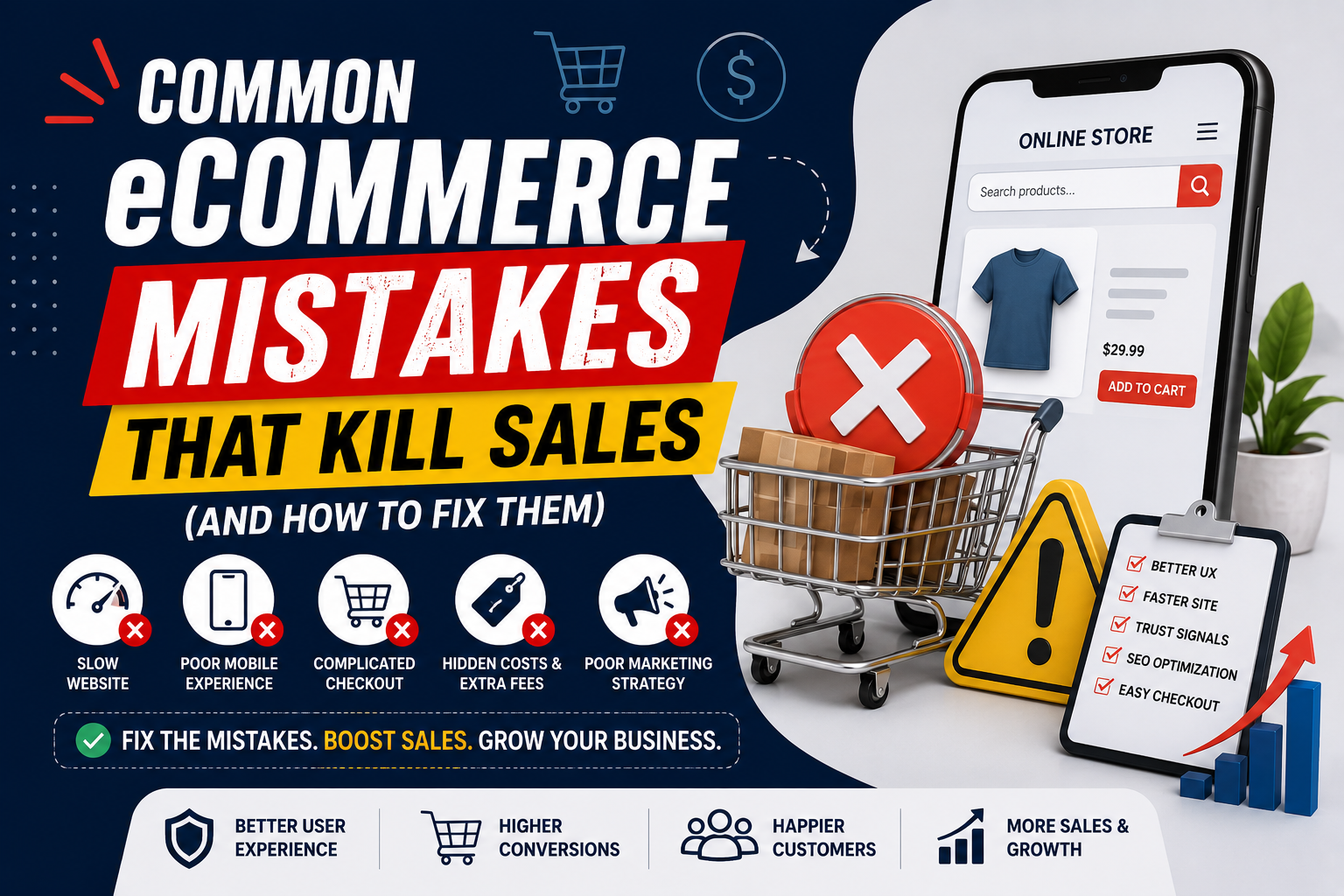
In this guide, we’ll explore the most common eCommerce mistakes that kill sales and provide practical solutions to fix them. Whether you’re running a startup store or managing an established online business, avoiding these mistakes can help improve conversions, customer satisfaction, and long-term growth.
- Slow Website Loading Speed
One of the biggest conversion killers is a slow website.
Modern shoppers expect websites to load within seconds. If your store takes too long to load, visitors are likely to leave before viewing your products.
Why It Hurts Sales
- Higher bounce rates
- Poor user experience
- Lower search engine rankings
- Increased cart abandonment
Studies consistently show that even a one-second delay can significantly impact conversions.
How to Fix It
- Optimize images
- Use a Content Delivery Network (CDN)
- Enable caching
- Minify CSS and JavaScript files
- Upgrade hosting infrastructure
- Optimize database performance
A fast website creates a smoother shopping experience and encourages customers to complete purchases.
- Poor Mobile Experience
More than half of all eCommerce traffic comes from mobile devices.
If your website isn’t optimized for smartphones and tablets, you’re likely losing a significant portion of potential sales.
Common Mobile Issues
- Tiny buttons
- Difficult navigation
- Slow loading pages
- Broken layouts
- Complicated checkout forms
How to Fix It
- Use responsive design
- Simplify navigation menus
- Optimize images for mobile devices
- Enable mobile-friendly checkout
- Test across multiple devices
A mobile-first approach is no longer optional—it’s essential.
- Complicated Checkout Process
Many customers abandon their carts because the checkout process is too complicated.
Common Problems
- Too many form fields
- Multiple checkout pages
- Forced account creation
- Confusing instructions
How to Fix It
- Offer guest checkout
- Reduce unnecessary fields
- Enable auto-fill functionality
- Provide a one-page checkout option
- Display progress indicators
The easier it is to buy, the more likely customers are to complete their orders.
- Hidden Costs and Unexpected Fees
Nothing frustrates customers more than discovering unexpected charges during checkout.
Examples include:
- Shipping fees
- Handling charges
- Taxes
- Service fees
Why Customers Leave
Customers often compare prices across multiple stores. Unexpected costs can instantly damage trust.
How to Fix It
- Be transparent about pricing
- Display shipping costs early
- Offer free shipping thresholds
- Clearly explain taxes and fees
Transparency improves customer confidence and reduces cart abandonment.
- Poor Product Descriptions
Many online stores use generic or incomplete product descriptions.
Why This Hurts Sales
Customers can’t physically inspect products online.
They rely on descriptions to understand:
- Features
- Benefits
- Specifications
- Usage information
How to Fix It
Write descriptions that:
- Focus on benefits
- Include keywords naturally
- Address customer concerns
- Explain product value
High-quality descriptions improve both SEO and conversions.
- Low-Quality Product Images
Visual presentation is critical in eCommerce.
Blurry, small, or outdated images can significantly reduce trust.
How to Fix It
Use:
- High-resolution images
- Multiple product angles
- Zoom functionality
- Lifestyle photos
- Product videos
Professional product photography can dramatically increase conversion rates.
- Lack of Customer Reviews
Customers trust other customers.
Many shoppers read reviews before making purchasing decisions.
Consequences
Without reviews:
- Trust decreases
- Conversion rates suffer
- Purchase hesitation increases
How to Fix It
Encourage customers to:
- Leave ratings
- Submit reviews
- Upload photos
- Share experiences
Social proof remains one of the strongest conversion factors.
- Weak SEO Strategy
A beautiful store won’t generate sales if nobody can find it.
Many eCommerce businesses neglect search engine optimization.
Common SEO Mistakes
- Duplicate content
- Missing meta titles
- Poor keyword targeting
- Broken links
- Slow site speed
How to Fix It
Invest in:
- Keyword research
- Technical SEO
- Content marketing
- Product page optimization
- Link building
SEO provides long-term organic traffic and sales opportunities.
- Ignoring Site Search Optimization
Customers who use site search often have high purchase intent.
If your search functionality is poor, they may leave.
Common Problems
- Irrelevant results
- No autocomplete
- Slow search performance
How to Fix It
Implement:
- Smart search technology
- Product filters
- Predictive search
- Synonym matching
A better search experience helps customers find products faster.
- Limited Payment Options
Customers have different payment preferences.
A lack of payment options can lead to abandoned purchases.
How to Fix It
Offer:
- Credit cards
- Debit cards
- PayPal
- Apple Pay
- Google Pay
- Buy Now Pay Later options
Payment flexibility increases conversions.
- Lack of Trust Signals
Customers need reassurance before entering payment information.
Missing Trust Elements
- SSL certificates
- Security badges
- Return policies
- Contact information
How to Fix It
Display:
- Secure checkout badges
- Customer testimonials
- Money-back guarantees
- Company information
Trust signals reduce purchase anxiety.
- Poor Navigation Structure
Customers should be able to find products quickly.
Confusing navigation leads to frustration and exits.
How to Fix It
Create:
- Clear categories
- Logical menu structures
- Breadcrumb navigation
- Product filters
Good navigation improves user experience and sales.
- Ignoring Analytics
Many businesses make decisions without data.
Why This Is Dangerous
Without analytics, you won’t know:
- Where customers drop off
- Which products perform best
- What marketing channels generate revenue
How to Fix It
Track:
- Conversion rates
- Bounce rates
- Traffic sources
- Cart abandonment
- Revenue metrics
Data-driven decisions lead to better results.
- Poor Inventory Management
Out-of-stock products frustrate customers.
Inventory issues can lead to lost sales and damaged brand reputation.
How to Fix It
Implement:
- Inventory tracking systems
- Automated stock alerts
- Real-time inventory updates
Proper inventory management ensures product availability.
- Weak Customer Support
Customer service can directly influence buying decisions.
Common Issues
- Slow response times
- No live chat
- Limited support channels
How to Fix It
Offer:
- Live chat support
- Email assistance
- Phone support
- FAQ sections
Responsive support builds trust and loyalty.
- Ignoring Email Marketing
Email remains one of the highest ROI marketing channels.
Yet many businesses underutilize it.
Effective Email Campaigns
- Welcome emails
- Cart recovery emails
- Product recommendations
- Promotional campaigns
Benefits
- Increased repeat purchases
- Higher customer retention
- Better customer engagement
Email marketing continues to drive significant revenue.
- No Personalization
Modern customers expect personalized experiences.
Examples
- Product recommendations
- Personalized offers
- Recently viewed products
How to Fix It
Use customer data to create relevant shopping experiences.
Personalization can increase average order value and conversion rates.
- Poor Return and Refund Policies
Customers want confidence before purchasing.
Complicated return policies create hesitation.
How to Fix It
Offer:
- Clear return instructions
- Easy refund processes
- Transparent policies
A customer-friendly return policy can actually increase sales.
- Not Using Retargeting Campaigns
Most visitors won’t purchase on their first visit.
Retargeting helps bring them back.
Platforms
- Google Ads
- Facebook Ads
- Instagram Ads
- LinkedIn Ads
Benefits
- Improved conversion rates
- Better ROI
- Increased brand awareness
Retargeting helps recover lost opportunities.
- Failing to Optimize for Conversion
Traffic alone doesn’t guarantee revenue.
Conversion optimization is essential.
Areas to Improve
- Product pages
- Call-to-action buttons
- Checkout process
- Trust signals
Best Practices
- A/B testing
- Heatmap analysis
- User behavior tracking
Small improvements can generate significant revenue gains.
How to Build a High-Converting eCommerce Store
Successful eCommerce businesses focus on:
Speed
Fast websites create better user experiences.
Simplicity
Customers should complete purchases effortlessly.
Trust
Security and transparency drive conversions.
Mobile Optimization
Mobile users must have a seamless experience.
Continuous Improvement
Regular testing and optimization improve performance over time.
Conclusion
The success of an eCommerce business depends on more than just great products. Website performance, user experience, trust, SEO, checkout optimization, and customer service all play critical roles in driving sales.
The good news is that most eCommerce mistakes are fixable. By identifying weak points in your store and implementing the strategies outlined in this guide, you can significantly improve conversion rates, reduce cart abandonment, and increase revenue.
Remember, every lost visitor represents a potential customer. By focusing on customer experience and continuous optimization, your online store can attract more buyers, convert more sales, and build long-term customer loyalty.
The most successful eCommerce businesses are those that continuously learn, test, and improve. Start fixing these common mistakes today, and you’ll be well on your way to creating a more profitable and sustainable online business.


